Description
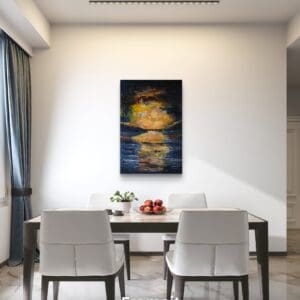
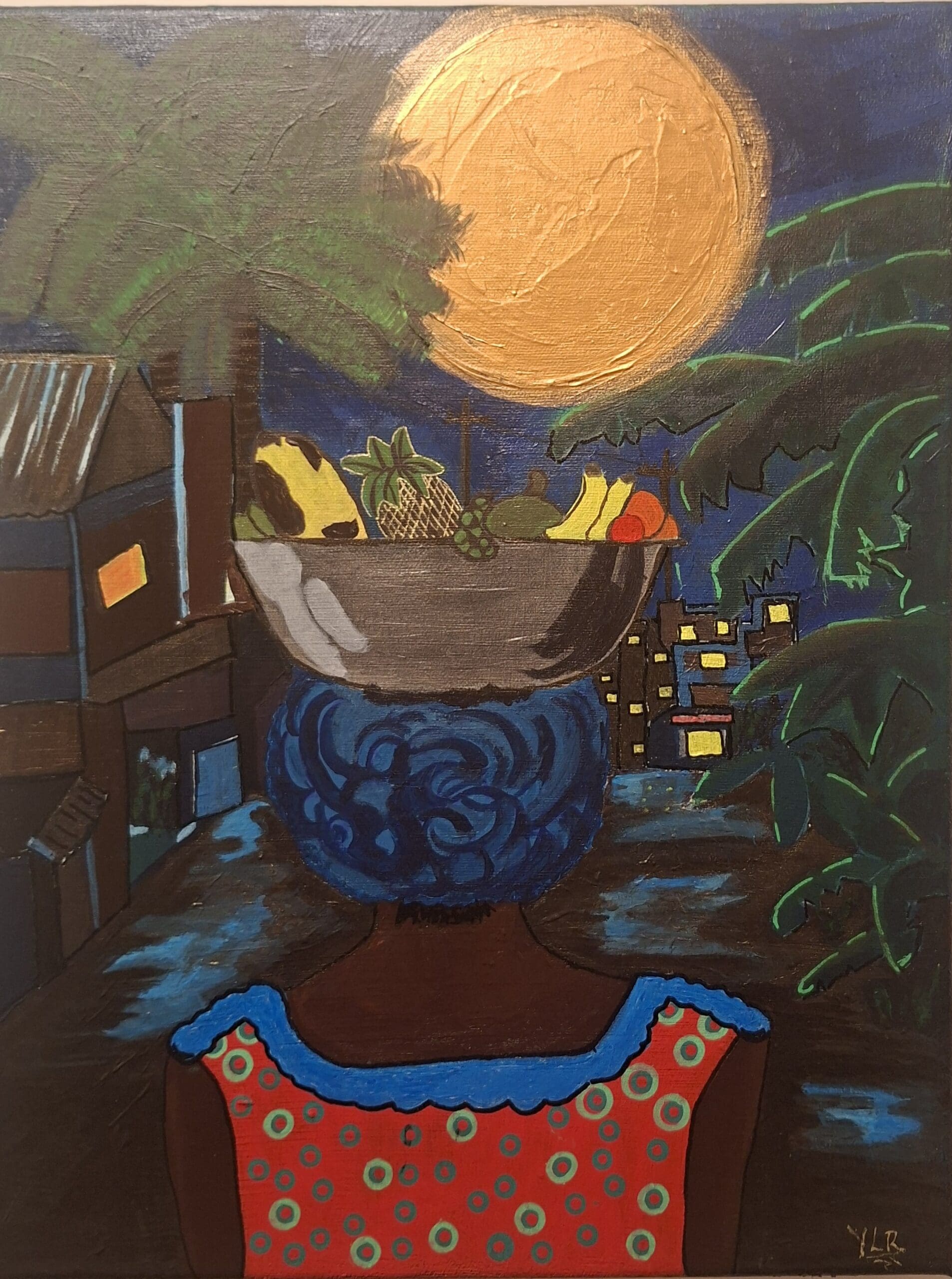
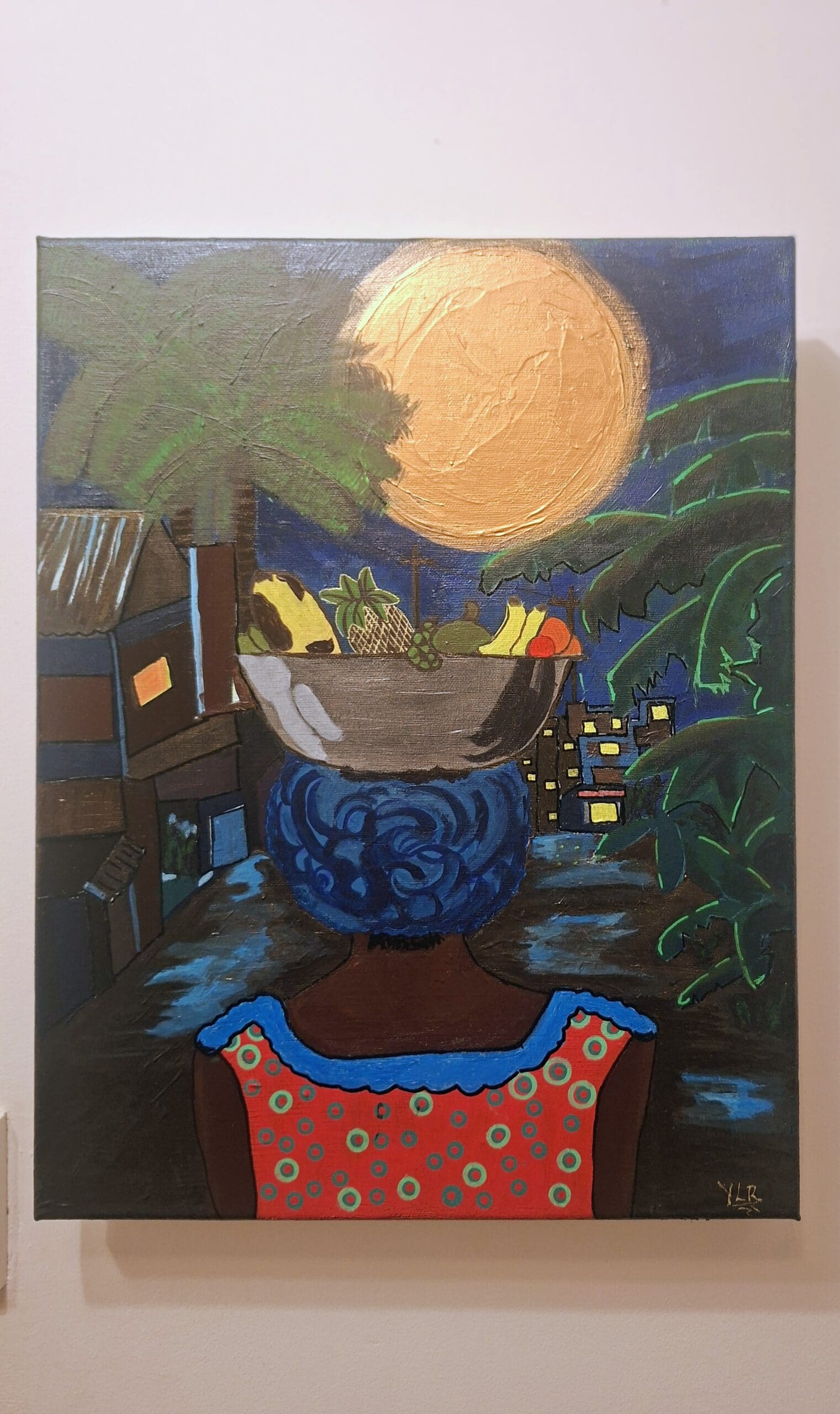
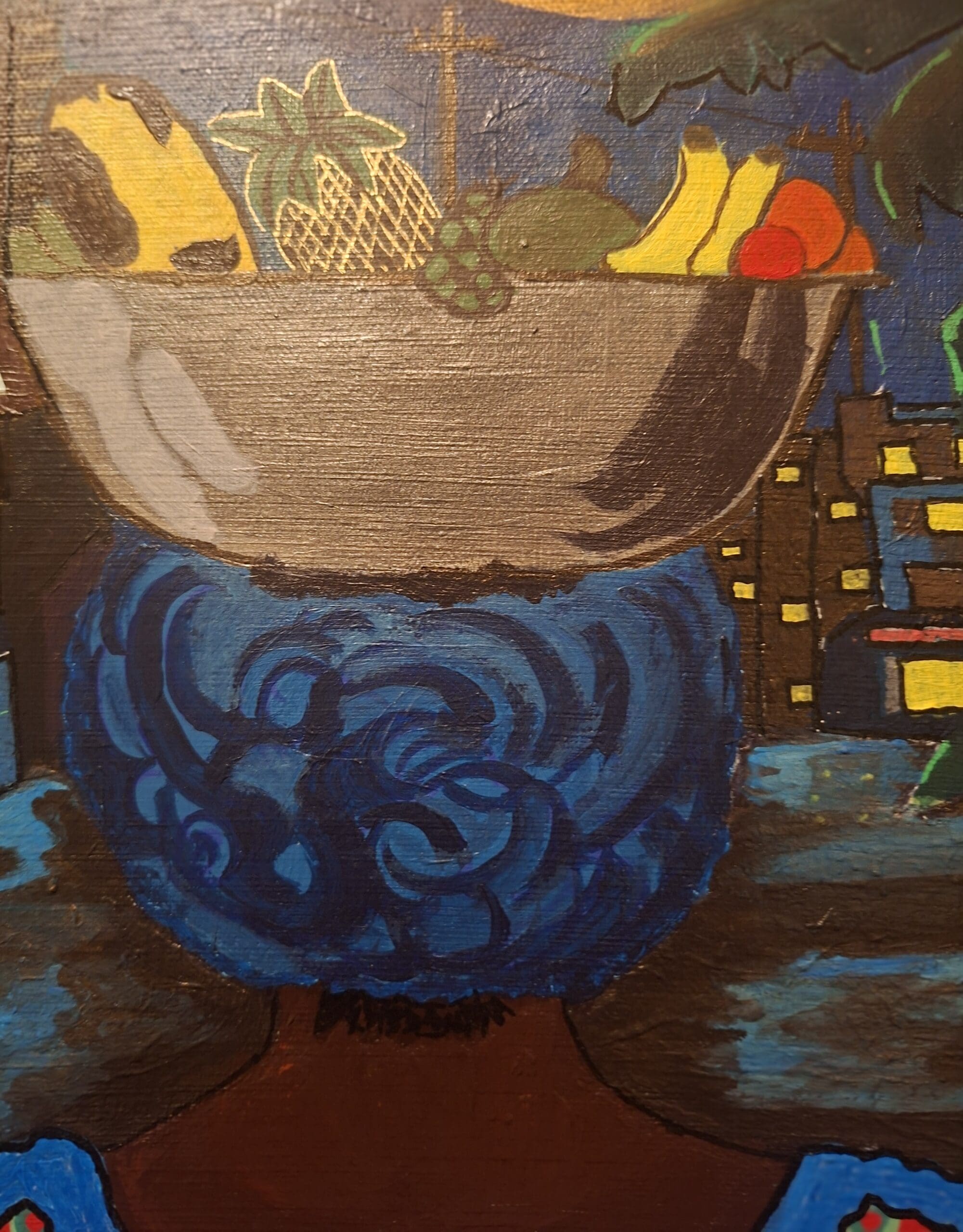
Before dawn, under a full gold moon, a woman walks toward the sleeping city with her ponchera balanced on her head. It holds plantains, a pineapple, bananas, grapes and tropical fruit. Her blue headwrap cushions the load, the way generations of women before her used the babonuco, a rolled pad of cloth, to carry the harvest from the countryside into town.
She is la marchanta, the travelling market woman of the Dominican Republic, whose name comes from the French marchand, “merchant.” Her lineage reaches back to the sixteenth century. In colonial Santo Domingo, enslaved and free Black women known as jornaleras or ganadoras walked the city selling root vegetables, flowers, firewood and food. As early as 1542, colonial officials complained that these women moved too freely and kept their own earnings. For them, trade was a means of survival, of building networks, and at times of freedom.
The marchanta stayed part of Dominican life for centuries. Well into the twentieth century, women from the hills of Villa Mella and the farms around Santiago left home in darkness, on foot or by donkey, to reach the city’s neighbourhoods by first light. Their pregón, a sung street cry, announced fresh limes, guandules, plantains and herbs at the door, and many housewives shared a morning coffee with them. Supermarkets and motorbike vendors have since mostly replaced them. Santiago honours them with the Plaza de la Marchanta.
The painting holds that journey in a single moment. The zinc roofs and banana plants of the barrio stand beside her. Ahead, the city’s windows are still lit, and the rain-washed road catches the moonlight. She is painted from behind, as anonymous as the thousands of women whose work fed the island but whose names were rarely written down. The gold moon, a recurring motif in Y.L.R.’s work, is both witness and blessing. It is the light that guided the marchantas before sunrise, and the ancestral memory the Dominican diaspora still carries.