Liam Ryan
From the classical masters to expressive contemporary drawing, Liam Ryan explores the human figure through contrast, gesture and the distinctive language of black and white on Payne's Grey.
A Classical Foundation, A Contemporary Voice
For Liam Ryan, drawing has always been about more than representation. It is a way of discovering the expressive potential of a line, a gesture and the relationship between light and shadow.
His artistic journey began at the age of twelve, inspired by a picture book of the Sistine Chapel. From Dublin to Michigan and New York, his career has encompassed commercial illustration, commissioned portraiture and the study of classical form.
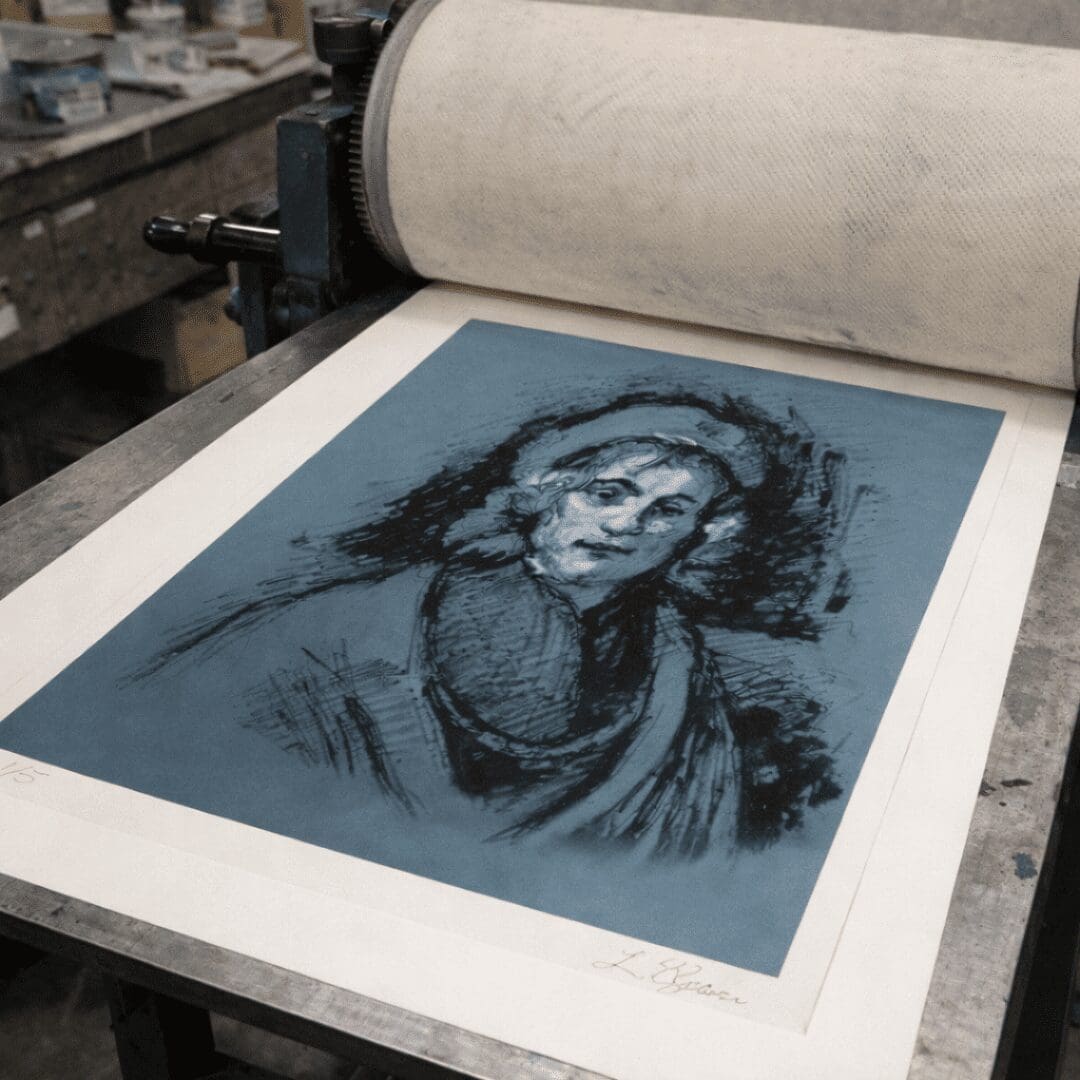
Now, through his collection The Blue Prints, Liam brings that foundation into a freer visual language, reinterpreting classical subjects through energetic mark-making and a distinctive restricted palette.
From Portraiture to The Blue Prints
My work combines a classical foundation in drawing with an expressive approach to mark-making. My fascination with drawing began at twelve, when I discovered a picture book of the Sistine Chapel.
My artistic journey has taken me from Dublin to Michigan and New York, including a period in commercial illustration and considerable involvement in commissioned portrait painting. Studying with the American fine artist Daniel E. Greene helped refine my understanding of form.
With The Blue Prints, I have moved beyond traditional portraiture towards a freer interpretation of classical subjects. Working in black and white on a Payne's Grey ground allows me to simplify the palette while giving greater emphasis to the character and energy of each mark.
"Working in black and white on a Payne's Grey ground allows me to simplify the palette while giving greater emphasis to the character and energy of each mark."
The Process Behind the Marks
For The Blue Prints, I begin with a work by a master whose composition, gesture or treatment of the figure interests me. Rather than reproduce it faithfully, I look for a personal interpretation through mark-making.
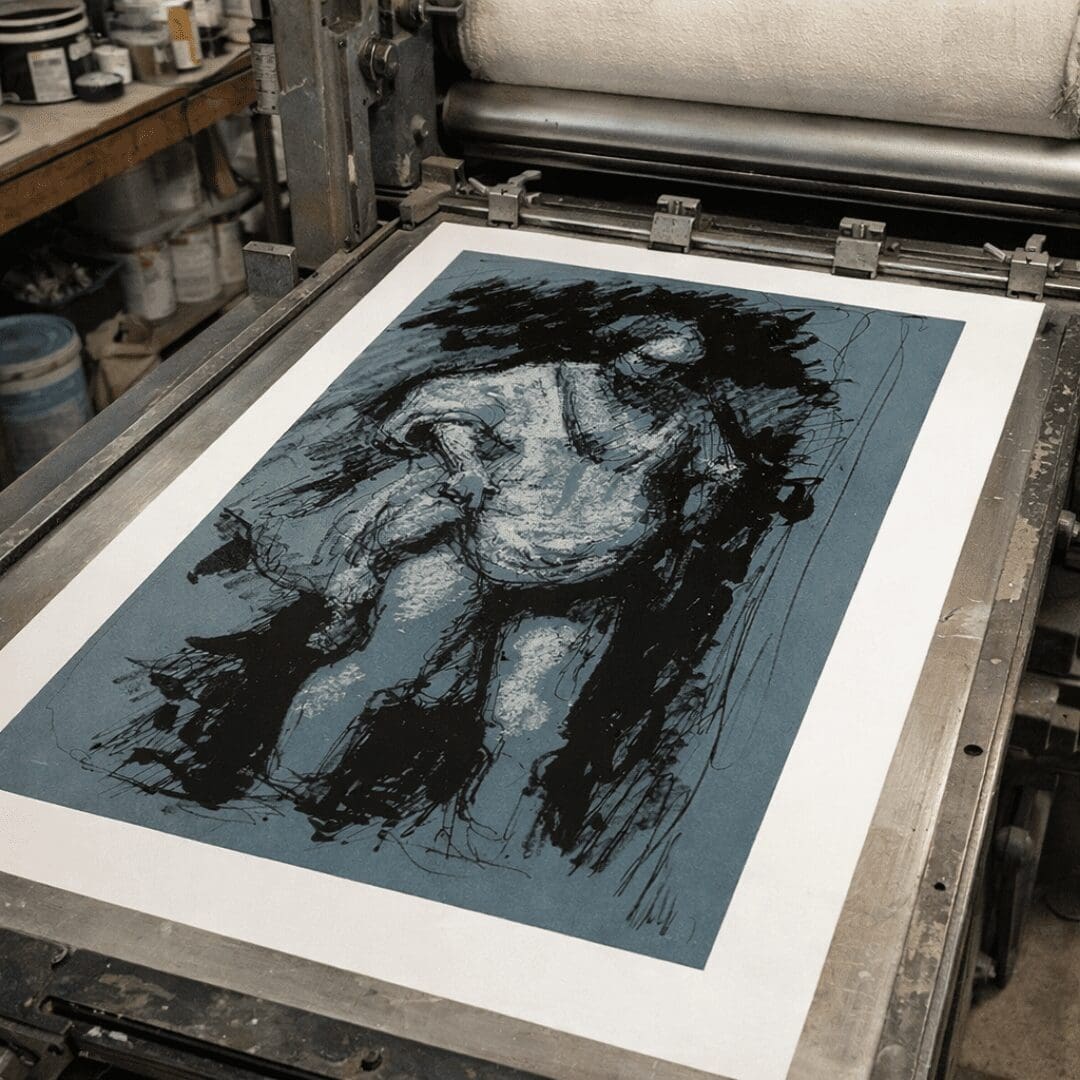
The mid-tone Payne's Grey ground provides a starting point between the darks and lights. I work in black and white, choosing oil pastel, marker or acrylic for the particular study.
I try to keep the black and white marks distinct rather than blend them together, as the resulting grey is not a quality I find appealing. The ground itself supplies the middle tone.
I begin by selecting a subject and considering what draws me to it — perhaps a silhouette, a gesture or the arrangement of light and shadow. I then choose the medium through which to interpret it on the blue-grey ground.
The original studies are intimate in scale. Translating them into larger prints allows the individual marks to take on a different presence, revealing what I think of as the "architecture of the mark."
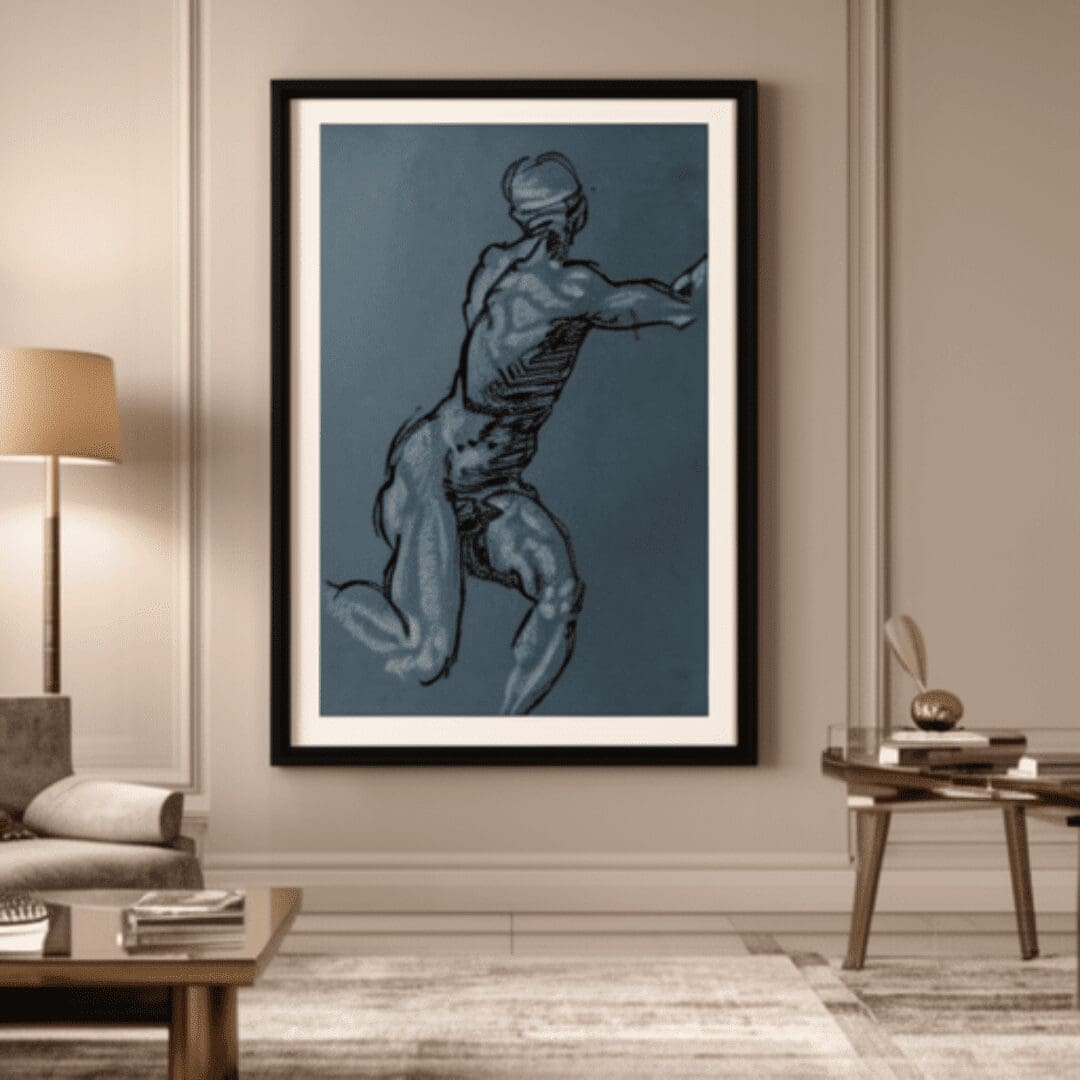
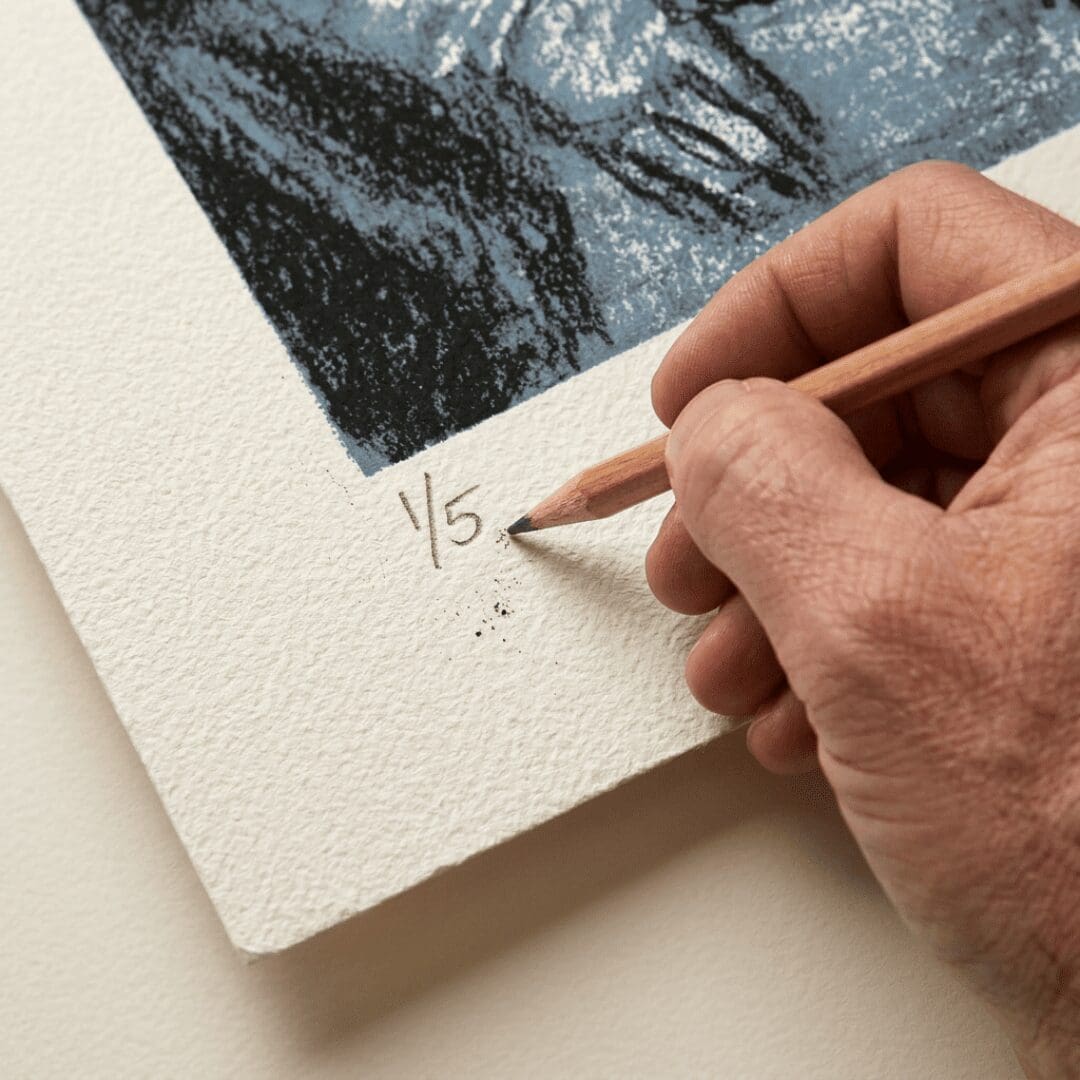
The finished works are offered as ultra-limited-edition prints: five prints in the large edition and ten in the salon edition for each subject.
The Enduring Influence of the Masters
Looking at other artists' work is an important source of inspiration. A particular gesture, silhouette or relationship between light and shadow can suggest the starting point for a new interpretation.
It is often a specific detail within a painting, rather than the whole image, that makes me want to explore it through my own mark-making.
The human figure is a recurring subject, alongside an interest in how classical imagery can be approached through contemporary expression.
In The Blue Prints, I explore the relationship between recognisable form and the individual marks that describe it.
I am interested in how a stroke, a silhouette or a passage of light can suggest a figure without every detail being resolved. The restricted palette gives those decisions particular importance.
Velázquez, Rembrandt and Michelangelo are important influences. Their treatment of the figure, form and light continues to provide material for study and reinterpretation.
I am also inspired by more modern artists, including John Virtue, Alberto Giacometti and Moses Soyer.
These influences sit alongside the classical foundation of my training and my interest in expressive mark-making.
Studying with Daniel E. Greene was another important part of my development, particularly in refining my understanding of form. My current work brings that discipline into a freer, more personal approach.
Finding Freedom Within a Restricted Palette
The choice depends on the kind of marks I want to make. A brush produces a different range of marks from an oil pastel or marker, so the medium affects how I interpret the subject.
I use acrylic partly because it dries quickly. This allows me to proceed with adding the lights without a prolonged wait for the darker passages to dry, helping me keep the black and white distinct rather than mixing them into grey.
The blue-grey ground connects the collection, while the different materials give each study its own character.
My current exploration is centred on what different materials can contribute to a restricted palette. Oil pastel, marker and acrylic each produce their own character of mark, allowing me to approach a subject differently while retaining the same Payne's Grey ground.
Scale has also become an important area of exploration. Enlarging intimate studies into grand-format prints changes the way the marks are experienced.
It allows their structure, texture and rhythm to become a more prominent part of the finished work.
"Enlarging intimate studies into grand-format prints changes the way the marks are experienced."
Looking Beyond the Classical Source
I hope viewers respond to the energy of the drawing and the relationship between the figure and the marks that describe it.
Recognising the classical source can add another dimension, but I would like the work to engage people without requiring that knowledge.
Enlargement invites closer attention to the marks themselves — their direction, texture and rhythm.
I hope the prints offer an immediate presence from a distance, while giving viewers something more to discover as they look closely.
Bringing The Blue Prints to New Audiences
My current focus is introducing The Blue Prints to a wider audience through Irish Artmart and through direct contact with interior-design studios.
The collection brings together reimagined subjects in large and salon-sized ultra-limited editions.
I am exploring how to present these works to collectors and within contemporary interiors, while continuing to develop the collection's visibility.