Andrii Tuz
From figurative protest to pure colour abstraction, Andrii Tuz creates work driven by energy, emotion and an urgent need to communicate. In this edition of Interview With The Artist, he discusses war, visual protest, creative instinct and the evolving language of his new series, Broken Flowers.
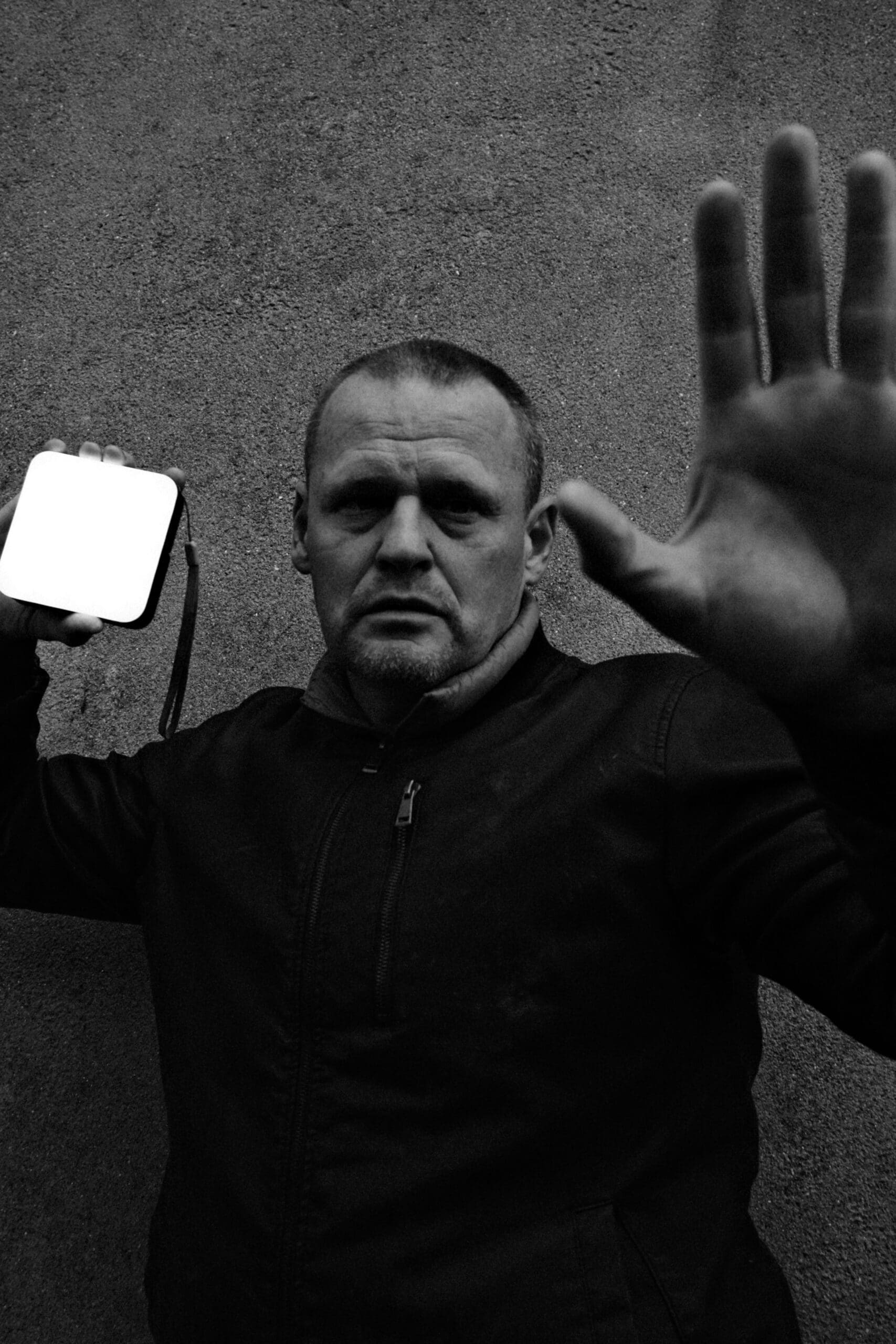
For Andrii Tuz, painting is less about illustrating an idea than transmitting a state. His work moves between social confrontation and abstraction, but beneath both is the same concern: how colour, form and energy can communicate something before words intervene.
How do you define your artistic style, and how has it evolved?
“I would call my style visual protest built on energy. For me, painting is not about illustrating an idea but about transmitting a state. I work in layers, dark foundations first, then detail, then the final accents that define everything.
It has changed a lot. In Ukraine I worked mostly with collage and had several solo exhibitions there. Moving to Ireland was a turning point: I moved from collage to painting, and from personal expression to visual protest. That became my series THEY FIGHT FOR THE FUTURE.
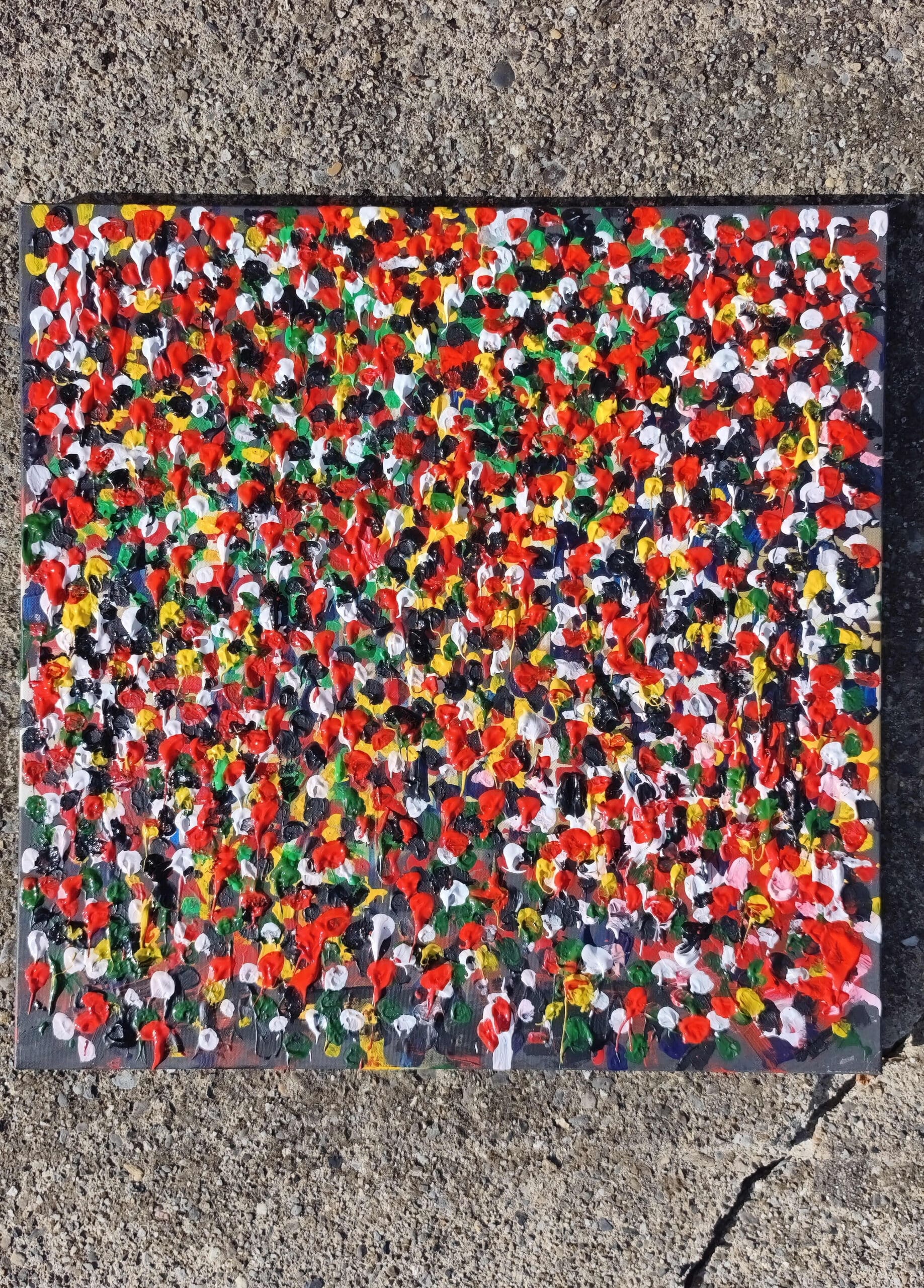
Recently the same energy has started to appear in a different form. In my new series, Broken Flowers, there are no figures at all, only colour, rhythm and pulse. I see it not as a break from protest but as its other side: the same energy, without the faces.
Abstraction is the hardest task for me, because it means transmitting feeling directly.”
“I don't build a picture. I respond to what is happening on the canvas.”Andrii Tuz
Can you walk us through your creative process?
My process starts with a state, not a plan. With the protest paintings, the concept comes first. Sometimes it comes from a philosophical text, sometimes from the news, sometimes from a dream. I sit with it until it becomes visual.
Then I work in layers: dark foundations first, then detail, then the final accents that define everything.
I don't always know what the painting will become. I enter a state of self-contemplation and simply give my energy to the canvas, and the image emerges in the process.
With Broken Flowers it is even more direct. There is no figure to build, so the painting is led by colour, rhythm and intention. I'm not describing a feeling, I'm trying to transmit it. For me it is cognition through intention.

What steps do you take from the initial concept to the final piece?
It depends on the series.
With my protest paintings, the concept comes first. Sometimes it comes from a philosophical text, sometimes from the news, sometimes from a dream. I sit with it until it becomes visual. Then I work in layers: dark foundations first, then detail, then the final accents that define everything.
With Broken Flowers there is no plan at all. I simply turn on the music and start working. I take the colours I have at that moment and apply them to the canvas roughly and emotionally: with strokes, drops and lines.
What I follow is rhythm, pulsation and colour harmony. I don't build a picture, I respond to what is happening on the canvas.
In both cases the goal is the same: to transmit energy directly.
Are there specific environments, moods, or moments that spark your creativity most?
I work outdoors, in my backyard. Sometimes even in light rain, but the sun is the best. When there is sun, the colours feel alive and I want to paint.
Music is always on, and it is different: jazz, rock, pop, anything with lyrics and energy. It puts me in a state where I stop thinking and simply react to the canvas.
Time doesn't matter much. Sometimes a painting takes half an hour, in one breath. Sometimes I return to it throughout the day, step away, come back and add more.
With my protest series the spark often comes from the news, from philosophical texts or from dreams. With Broken Flowers it comes from the moment itself: the sun, the music and the colours in front of me.
Is there a recurring theme in your art?
Yes. The recurring theme is the human being and what war and cruelty do to us.
My protest paintings depict people after the war. Behind them is a question I keep returning to: why are we so unable to see the beauty of the world?
Broken Flowers asks the same question from the other side. There are no figures there, only colour and rhythm.
If the protest paintings show what we destroy, the colour paintings show what is still there to be seen.

What artists, past or present, have inspired or influenced your work?
In the world there are artists whose activity is equal to the very concept of art. Through the creative act, they come to know the world by creating their own images. It is harder than it might seem.
From the fantastic works of Maria Prymachenko to the expressionism of Jackson Pollock, to primitive art and folk decorative painting.
How do you stay current with new techniques or mediums, and have you recently experimented with any?
I stay current mostly through social media and online artist communities. They let me see how artists around the world work, which materials they use and what approaches they try. I don't follow trends, but I like to see what is possible.
For me, experimenting is a natural way of working. I choose materials and methods experimentally, and let the work itself guide my decisions.
The biggest recent experiment is my new series, Broken Flowers. After years of figurative protest paintings, I started working with pure colour abstraction: music on, rough strokes, drops and lines, no plan.
It is a completely different way of thinking about a painting.
How do you decide which medium or method best conveys your vision?
Most of the time I don't decide in advance. I choose materials and methods experimentally and let the work itself guide me.
Acrylic on canvas is my main language now. It dries fast, it allows layers, and it can handle both the dark, dense foundations of my protest paintings and the rough strokes, drops and lines of Broken Flowers.
Before moving to Ireland I worked mostly in collage, so I know how different media change what a work can say.
For me the question is not “which medium is best?” but “which one lets the energy through without getting in its way?”
When the idea needs layers and detail, I build the painting slowly. When it needs speed and rhythm, I work fast, with music on, and let the paint move.
How do you hope viewers will interpret or respond to your work?
I don't expect a particular interpretation. What matters most to me is that the viewer does not remain indifferent.
If a painting makes someone stop and feel something, even something they can't name, that is already a response.
With my protest paintings, I hope people feel the weight of what is shown.
With Broken Flowers, I hope for something simpler and more physical: that the colour and rhythm reach the viewer directly, before any explanation, the way music does.
“If a painting makes someone stop and feel something, even something they can't name, that is already a response.”
What's next for Andrii Tuz?
Right now I am focused on two things. The first is my ongoing series THEY FIGHT FOR THE FUTURE, which continues to grow.
The second is the new series, Broken Flowers, which is developing fast.
I am also actively applying to open calls and reaching out to galleries in Ireland. Nothing is confirmed yet that I can announce, but I am working on it and will be glad to share news as soon as there is something to share.
Meanwhile, my original paintings are available through my website and on Irish Artmart.
Discover Andrii Tuz on Irish Artmart
Explore Andrii's original artwork and view his artist store on Irish Artmart.